

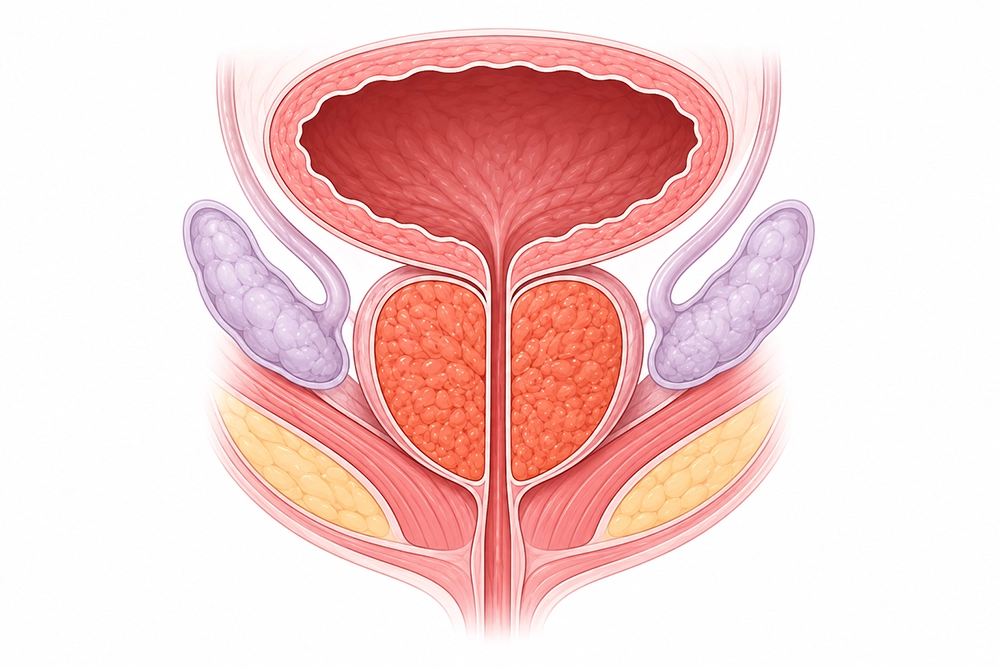
What Is a Prostate Biopsy?
A prostate biopsy is a procedure performed to collect small tissue samples from the prostate for detailed examination. It is the most definitive method for diagnosing prostate cancer and helps determine whether abnormal prostate findings require further treatment or monitoring.
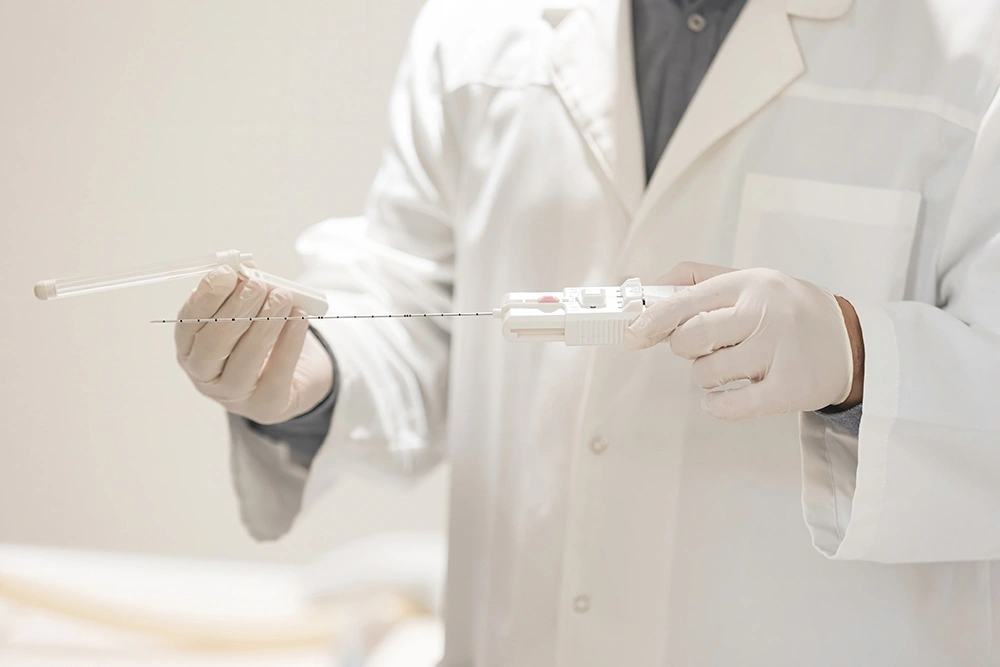
During the procedure, a specialised biopsy needle is carefully guided into the prostate to obtain multiple tissue samples in a controlled and systematic manner. The biopsy is usually performed under local anaesthesia to minimise discomfort.
The collected samples are then examined under a microscope to identify abnormalities, including prostate cancer and other prostate conditions.

During the procedure, a specialised biopsy needle is carefully guided into the prostate to obtain multiple tissue samples in a controlled and systematic manner. The biopsy is usually performed under local anaesthesia to minimise discomfort.
The collected samples are then examined under a microscope to identify abnormalities, including prostate cancer and other prostate conditions.
Why Is a Prostate Biopsy Done?
Prostate biopsies are generally considered to be the most reliable and definitive method for diagnosing prostate cancer, as they involve directly examining prostate tissue under a microscope. This allows doctors not only to detect the presence of cancer cells, but also to assess their characteristics and significance.
While alternative tests such as PSA blood tests, digital rectal examinations or imaging scans may discover potential indications of cancer, they cannot provide a definitive diagnosis on their own.
The information obtained from a biopsy plays an important role in guiding treatment decisions, ensuring that patients receive appropriate and timely care based on an accurate diagnosis.
While alternative tests such as PSA blood tests, digital rectal examinations or imaging scans may discover potential indications of cancer, they cannot provide a definitive diagnosis on their own.
The information obtained from a biopsy plays an important role in guiding treatment decisions, ensuring that patients receive appropriate and timely care based on an accurate diagnosis.
Dr Lincoln Tan provides specialist consultation and timely prostate biopsy arrangements when clinically indicated, with consultation-to-biopsy pathways available within 48 hours in suitable cases.
Transrectal vs. Transperineal Prostate Biopsy
There are two main approaches to performing a prostate biopsy, based on how the prostate is accessed:
Transrectal Prostate Biopsy
This conventional method passes the biopsy needle through the rectum to reach the prostate. As the needle passes through the rectal wall, there is a higher risk of infection. Certain areas of the prostate, particularly the anterior regions, may also be harder to sample accurately.
Transperineal Prostate Biopsy
This approach passes the biopsy needle through the skin between the scrotum and anus (perineum). By avoiding the rectum, it lowers the risk of infection and avoids rectal bleeding. Using ultrasound or MRI guidance, transperineal biopsy also allows more accurate and systematic sampling of the prostate, including anterior regions where cancers may otherwise be missed.
Transrectal Prostate Biopsy | Transperineal Prostate Biopsy | |
Access Site | Through the rectum | Through the skin (perineum) |
Risk of Infection | Higher due to rectal bacteria exposure | Significantly lower as the rectum is avoided |
Antibiotics Usage | Typically required | Seldom required |
Sampling Accuracy | May miss anterior prostate regions | Better access to entire prostate, including anterior zones |
Diagnostic Accuracy | Higher chance of under-sampling in certain areas | More systematic and improved detection due to targeted sampling |
Location | Often hospital-based | Performed in-clinic without hospitalisation |
Through the rectum
Through the skin (perineum)
Higher due to rectal bacteria exposure
Significantly lower as the rectum is avoided
Typically required
Seldom required
May miss anterior prostate regions
Better access to entire prostate, including anterior zones
Higher chance of under-sampling in certain areas
More systematic and improved detection due to targeted sampling
Often hospital-based
Performed in-clinic without hospitalisation
As one of the clinical leads involved in establishing transperineal prostate biopsy techniques in Singapore, Dr Lincoln Tan uses targeted transperineal biopsy approaches designed to improve cancer detection while reducing biopsy-related infection risks.
What Is the Prostate Biopsy Process Like?
A specialist will typically follow this process when carrying out prostate biopsies, with specifics changing depending on the technique used.
Anaesthesia
Patients are placed under local anaesthesia in order to minimise discomfort during the biopsy. This prevents most patients from experiencing pain before and after the procedure.
Prostate Biopsy Technique
Your specialist utilises a prostate biopsy approach to guide a needle into the prostate. This is often accompanied by an ultrasound or MRI probe for accurate imaging of the procedure site.
Sample Collection
A tissue sample is collected from the prostate gland and stored for observation. The needle is then removed.
Results Analysis
A prostate biopsy provides key diagnostic information, including:
- Whether prostate cancer cells are present
- How aggressively the cancer cells are spreading
- What stage the cancer may currently be in
Using this information, your doctor is able to make a diagnosis regarding your condition and establish a treatment plan based on your results.
Benefits of a Prostate Biopsy
Ultimately, the intent of a prostate biopsy is to provide critical insights that shape how your condition is managed. This procedure:
Confirms the Presence of Cancer
A prostate biopsy provides a definitive confirmation of whether cancer is present, forming the foundation for further management.
Guides Personalised Treatment Planning
A biopsy provides detailed information about the cancer, including how aggressive it is and how much of the prostate is affected. This allows your specialist to recommend a treatment plan tailored to your specific condition, whether that involves active surveillance or more definitive treatment.
Empowers Early Intervention
In cases where cancer is detected, early diagnosis allows for timely intervention before the disease progresses. Identifying cancer at an earlier stage can expand treatment options and improve long-term outcomes.
Early Assessment Matters for Prostate Symptoms and Prostate Cancer Risk.
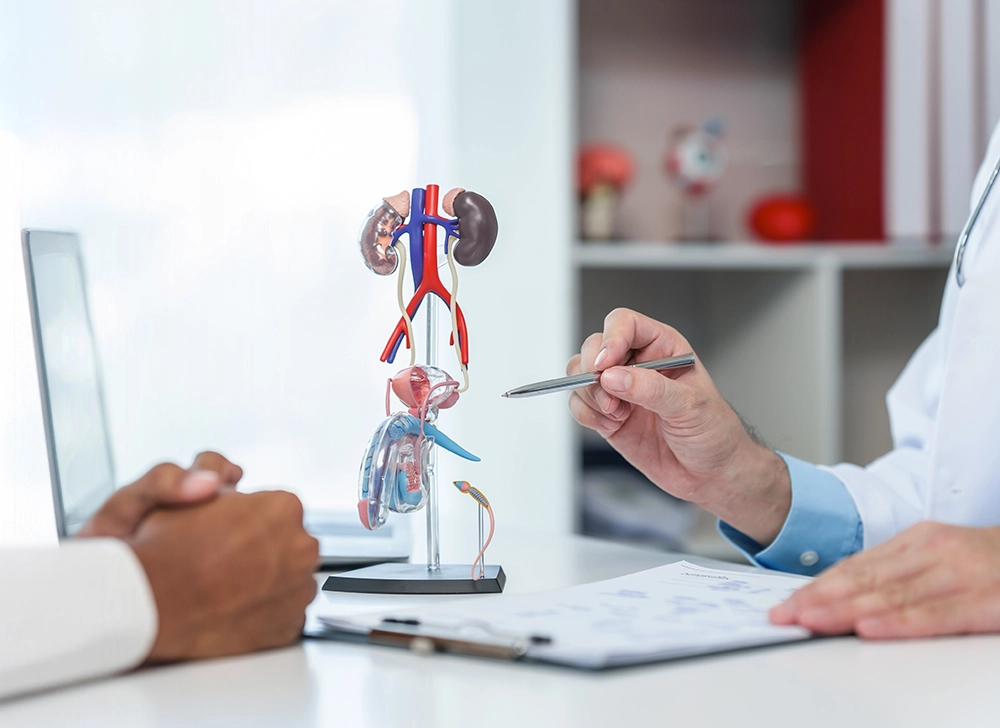
Specialist evaluation can help identify the cause of prostate concerns and guide appropriate next steps for investigation and treatment.
FAQs About When a Prostate Biopsy May Be Needed
Why is a prostate biopsy important?
Does a high PSA always mean cancer?
Can MRI avoid prostate biopsy?
What PSA level usually requires biopsy?

Dr Lincoln Tan
Dr Lincoln Tan is a consultant urologist with a subspecialty focus in prostate cancer and extensive experience in advanced diagnostics and prostate biopsy techniques. Dr Tan served as one of the clinical leads who introduced free-hand, office-based transperineal prostate biopsies in Singapore, helping to establish a safer and more accurate approach to prostate cancer diagnosis.
Dr Tan’s clinical approach centres on careful risk assessment and a fuss-free, patient-focused pathway, ensuring that biopsies are carried out efficiently with minimal disruption.
Dr Lincoln Tan is a consultant urologist with a subspecialty focus in prostate cancer and extensive experience in advanced diagnostics and prostate biopsy techniques. Dr Tan served as one of the clinical leads who introduced free-hand, office-based transperineal prostate biopsies in Singapore, helping to establish a safer and more accurate approach to prostate cancer diagnosis.
Dr Tan’s clinical approach centres on careful risk assessment and a fuss-free, patient-focused pathway, ensuring that biopsies are carried out efficiently with minimal disruption.